

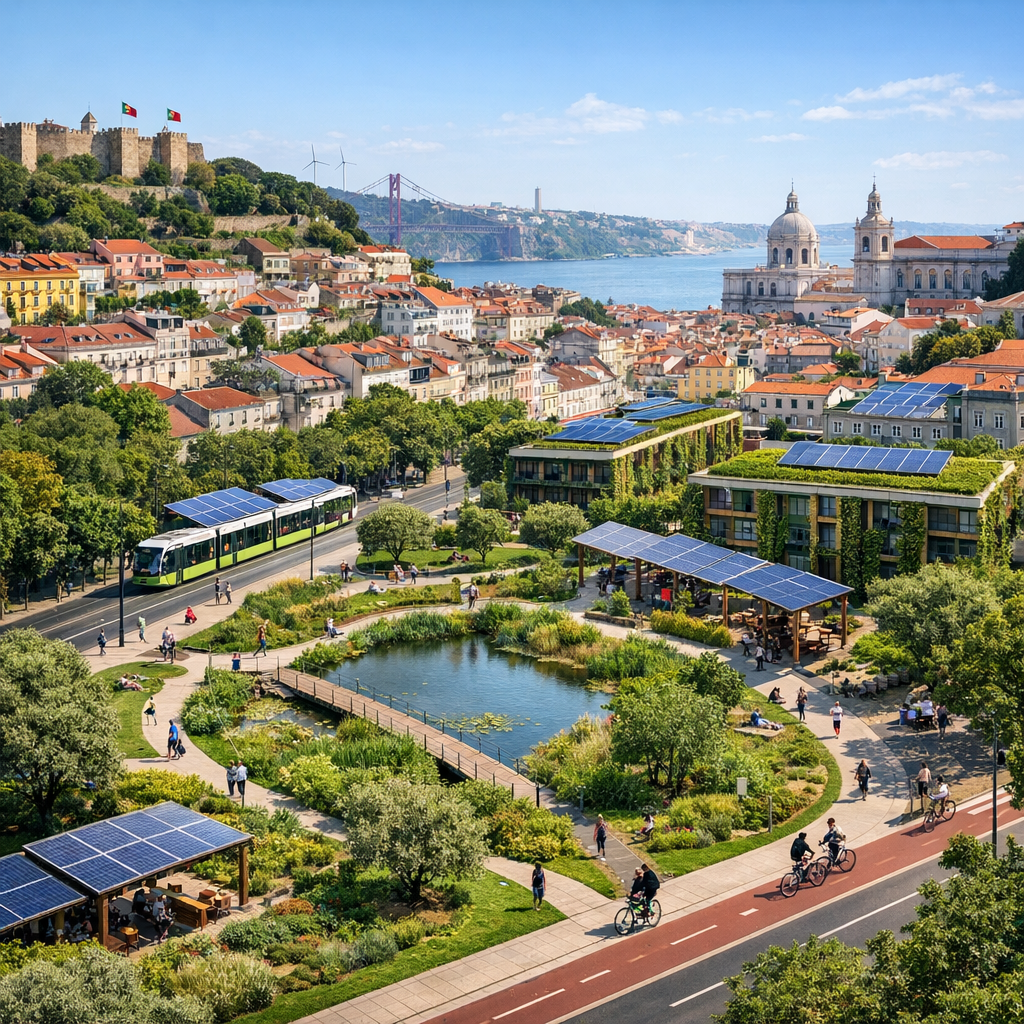
Lisbon has long been at the forefront of environmental sustainability, implementing a range of initiatives aimed at enhancing the city’s ecological footprint and improving the quality of life for its residents.
Climate Action and Adaptation
The city has been recognized for its proactive approach to climate change. Lisbon is part of the European Commission’s “100 Climate Neutral and Smart Cities by 2030” initiative, aiming to achieve climate neutrality by 2030. This commitment involves reducing greenhouse gas emissions by 80% compared to 2002 levels and preparing the city for extreme climate events. The Lisbon Climate Contract 2030, awarded by the European Community, places the city among the 23 mentor cities of this initiative.
Enhancing Green Spaces
Lisbon places a strong emphasis on preserving and expanding its green spaces. The city has developed environmental trails, such as the Monsanto Green Corridor and the Green Quarter in Alvalade, to promote microclimatic regulation and improve thermal comfort for residents and visitors. These initiatives are part of the European Coolnoons project, which aims to tackle the challenges of global warming through nature-based solutions.
Promoting Circular Economy
In collaboration with TOMRA and the Portuguese hospitality association AHRESP, Lisbon has implemented a city-wide reusable cup system. This initiative aims to reduce plastic waste and emissions by introducing a smart deposit return system for reusable cups, particularly targeting the city’s bustling nightlife and hospitality sector.
Community Engagement and Education
Lisbon actively engages its community in environmental awareness and education. The city offers programs like “Lisboa a Compostar,” encouraging home composting among residents. Additionally, the “Ripas Workshop” provides a space for the reuse and recovery of end-of-life furniture, promoting social inclusion and sustainable practices.
Air Quality Monitoring
To ensure a healthy environment, Lisbon has established a network of sensors across the city to monitor air quality parameters such as nitrogen dioxide, ozone, and particulate matter. This monitoring helps in diagnosing environmental conditions, mapping priority areas for intervention, and encouraging behaviors to mitigate the effects of atmospheric pollution.
Through these comprehensive efforts, Lisbon continues to demonstrate its dedication to environmental sustainability, setting an example for cities worldwide.