

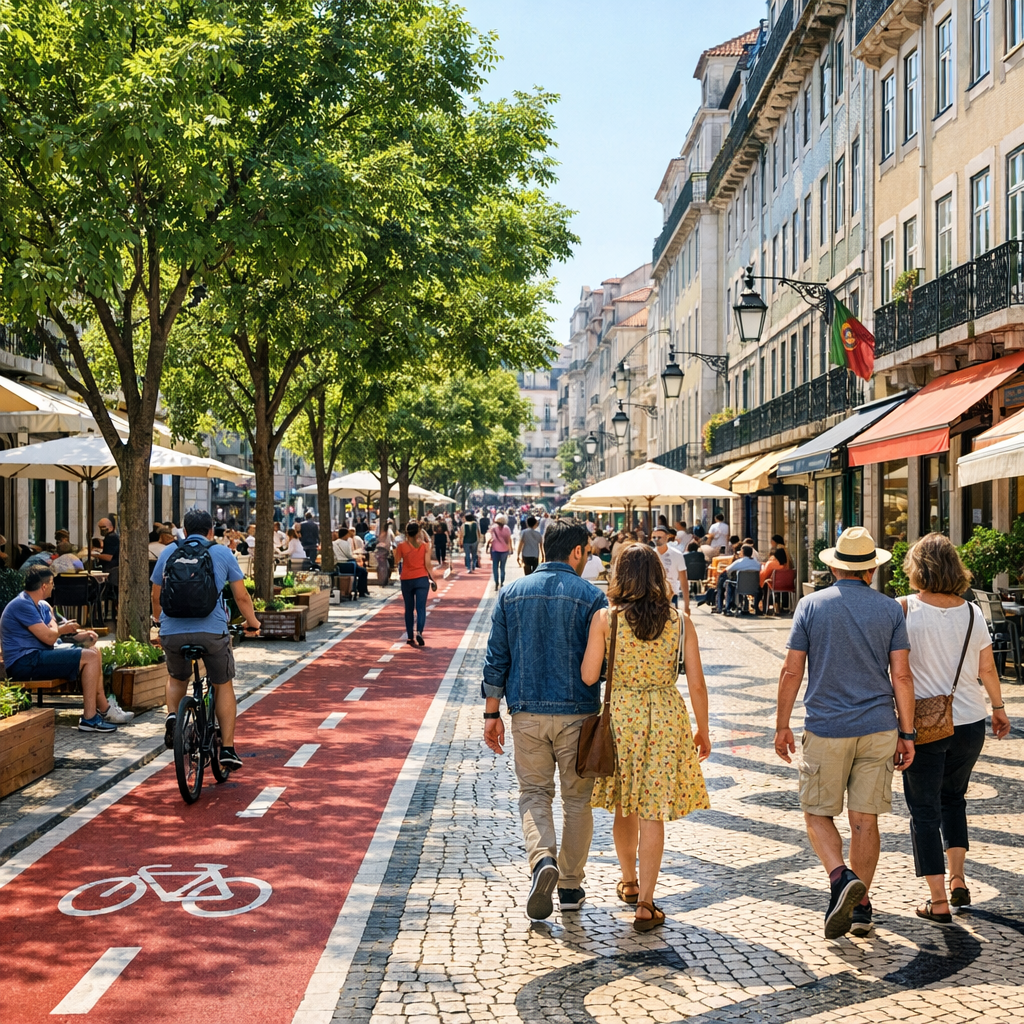
Lisbon is investing heavily in rethinking its public spaces, with major initiatives underway that aim to improve walkability, sustainability, and quality of life at a neighbourhood scale. Here are some of the city’s most important projects and what they mean for those living here—how your daily environment may soon change.
Rehabilitation of the Almirante Reis Axis
The Almirante Reis corridor—a historic route through central Lisbon—is in the process of transformation into a more pedestrian-friendly, green, and balanced public space. The project spans the avenue and adjacent streets like Rua da Palma, and includes plans for a continuous segregated cycle lane, wider sidewalks lined with trees, and improvements in lighting and safety. Together, city planners aim to build a green structure that connects from Martim Moniz northwards toward Praça Francisco de Sá Carneiro. This means fewer cars dominating that stretch—and more room to walk, pause, and breathe outdoors.
“Há Vida no Meu Bairro” Program: Bringing Services Closer
Lisbon’s “There’s Life in My Neighborhood” program puts into practice what many call the “15-minute city” concept—ensuring that six essential urban functions (commerce, green spaces, education, sport, culture, health and social support) are accessible within walking distance. The city is carrying out diagnostic studies across its 24 parishes and selecting local public space improvements accordingly. For residents, this could mean better access to schools and shops nearby, safer crosswalks, and greener shared spaces where neighbors can meet.
Sete Rios Square Revitalized
Praça Marechal Humberto Delgado (Sete Rios) has recently undergone a makeover focused on reclaiming space for pedestrians and public life. Redistributing vehicle traffic along the viaduct, the square now includes wide sidewalks, green areas with more than 200 trees, a children’s playground, cycle paths, and a shared-bicycle station. One key change: the street in front of the Zoo is no longer dominated by cars but dedicated to public use—relaxation, recreation, and community gathering.
What These Projects Mean for You
- Better walkability: smoother pavements, obstacle-free sidewalks, and safer crossings are spread across projects.
- More green spaces: trees, gardens, and corridors are being planted or upgraded to make city life healthier and cooler.
- Balanced transport: fewer car lanes in some areas, better cycle paths, more room for buses and public transit.
- Neighborhood identity and inclusion: many initiatives are developed in collaboration with parishes and local people, preserving heritage trees and reflecting community needs.
Challenges & Looking Ahead
Executing these projects means juggling trade-offs: managing traffic flow while reducing road dominance, ensuring funding and maintaining green zones, and coordinating with existing infrastructure. Some changes—like the shift in Almirante Reis or adjustments in Sete Rios—also require patience from locals used to older patterns of urban navigation.
Ultimately, Lisbon’s ongoing public space renewal paints a picture of a city that wants its streets back—not just as passageways for cars, but as places to live, meet, and linger. If these efforts succeed, you will soon find more reason to walk, linger and engage in your own neighbourhood.