

By Diogo Sousa
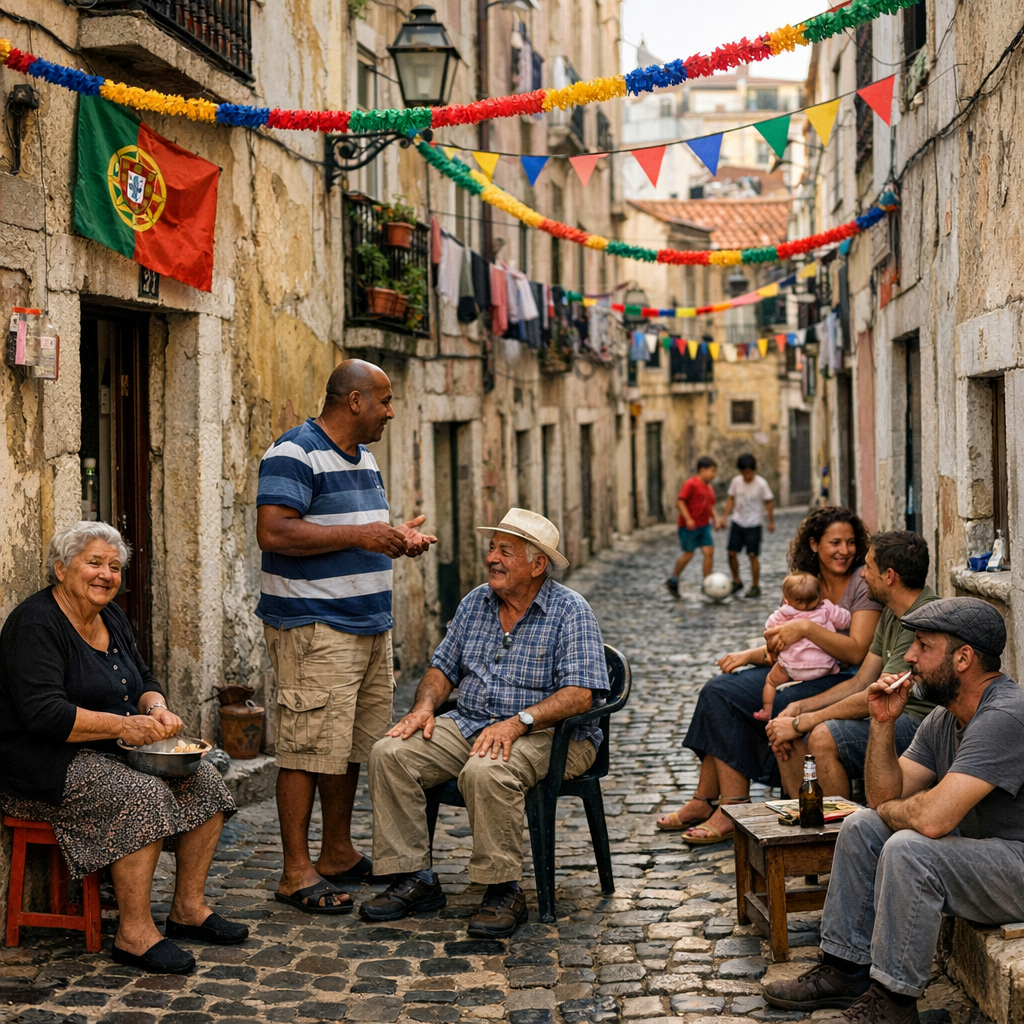
I’ve walked the winding alleyways of Mouraria so many times I know the weight of each stone, the arches’ echoes, the threads of many languages in every doorway. But lately, the feelings they carry are changing. I interviewed neighbours born here, and others who arrived seeking refuge, to understand what it means to live in Mouraria today—as tradition treads water beneath rising tides of transformation.
Know Your Neighbours
Sinho Baessa de Pina, born in the self-built neighbourhood of Fontaínhas, recalls childhood in a community where “djunta mó”—Cape Verdean for “joining hands”—wasn’t just a saying, but the rhythm of daily life. In Boba, a relocated community after Fontaínhas was demolished, mutual help, shared food, collective memory: these remain cornerstones. But gentrification, rising rents, property speculation—things far less so.
When Urban Renewal Meets Identity
The City Council’s rehabilitation efforts, while praised officially, are viewed with ambivalence by many residents. Traditional public spaces are becoming polished for visitors, façades curved, but less room is left for the voices already here—do stories get preserved, or packaged and sold?
The example of Mouraria reflects deeper debates: who gets to shape the narrative of change? In some cases, newcomers—tourists, expats, business owners—bring investment and vibrancy; in others, essential elements of daily life are pushed to the margins or out of reach.
Public Memory as Resistance
Oral history workshops such as Memórias de Lisboa—and the “Lives and Memories of the Neighbourhood” series—create counterweights to erasure. Elders recount traditions, local festivals, languages, family stories. Younger people record, archive, share. These acts are not nostalgic; they are urgent. They anchor Mouraria in its own terms.
What Matters Most
- Belonging: The way people feel at home—do they own their narratives, their street, their voice?
- Accessibility: Affordable housing, approachable local shops, not just boutiques and cafés with foreign menus.
- Community spaces: Squares, tascas (local eateries), cultural centres where generations meet, stories are exchanged.
- Respect: For difference—immigrant lives, traditional ways, languages. Mouraria is many voices, not one script.
I walked out of Mouraria today under a sky that felt both global and intimate—and realized that watching neighbourhoods change doesn’t have to mean standing outside. It can mean helping them stay true, resilient, generous—while welcoming new rhythms. That is Mouraria’s story, still being told.