

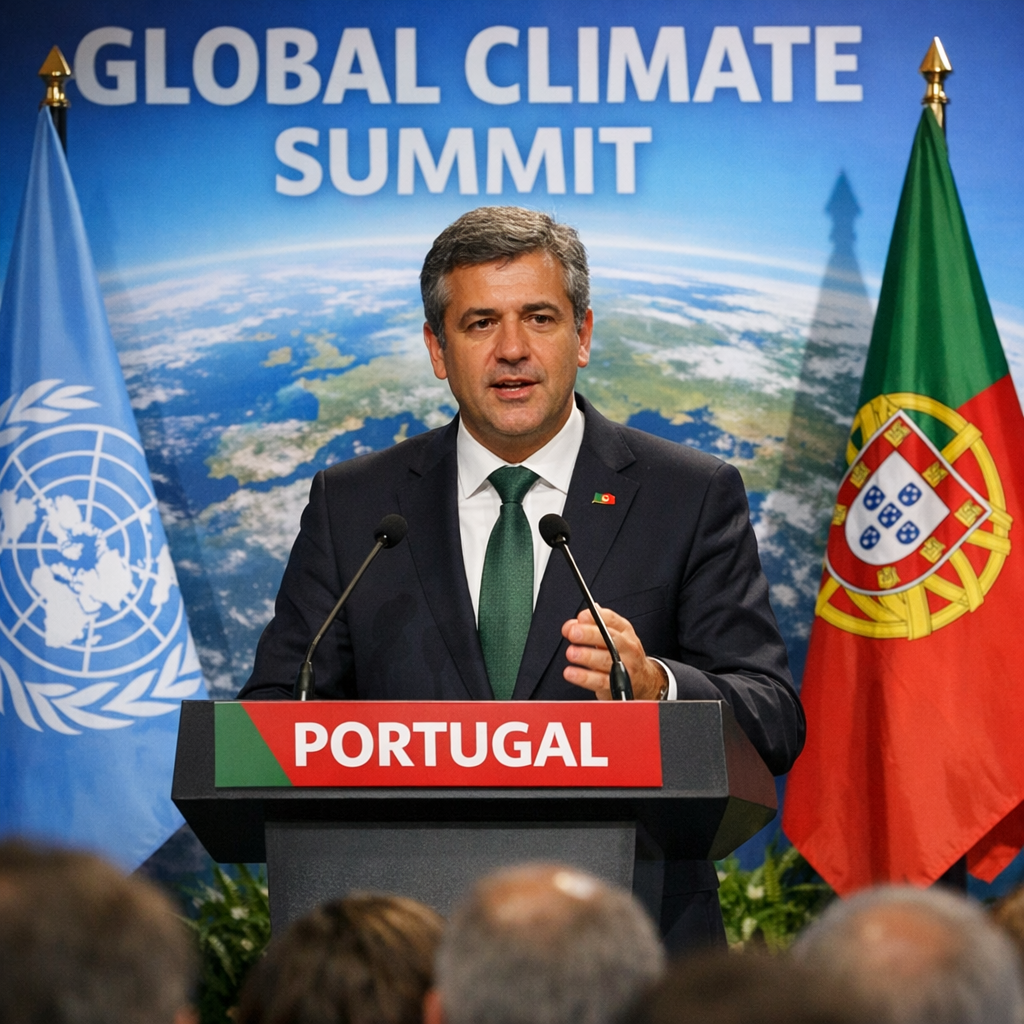
Portugal has emerged as a frontrunner in the global fight against climate change, demonstrating a steadfast commitment through ambitious policies and active participation in international initiatives.
Ambitious National Targets
In 2021, Portugal enacted the Climate Framework Law, setting a legally binding goal to achieve carbon neutrality by 2045. This objective entails balancing greenhouse gas emissions with the capacity to capture these emissions, contributing to limiting global warming to 1.5ºC. The National Energy and Climate Plan 2030 outlines strategies to reduce emissions by 55% from 2005 levels by 2030 and to increase the share of renewable energy in final energy consumption to 51% by the same year.
Progress in Emission Reductions
Portugal has made significant strides in reducing greenhouse gas emissions. Between 2005 and 2023, the country achieved a net emissions reduction of 43.9%, surpassing the EU average reduction of 30.5% over the same period. This progress is largely attributed to the expansion of renewable energy sources and improvements in energy efficiency.
Active Participation in International Conferences
Portugal has been an active participant in United Nations Climate Change Conferences. At COP29 in Baku, Azerbaijan, the Portuguese delegation emphasized the importance of increasing global efforts to meet the Paris Agreement targets and limit global temperature rises to 1.5ºC. The country also highlighted its commitment to international cooperation, particularly with Portuguese-speaking countries, through initiatives like converting debt into climate investments.
Financial Contributions to Global Climate Initiatives
Portugal has demonstrated its commitment to global climate action through financial contributions. The country has pledged €1 million to the Adaptation Fund and €1.5 million to the Lusophone Core for Transparency, supporting climate adaptation and transparency initiatives in developing countries.
Challenges and Future Directions
Despite these achievements, challenges remain. As of April 2025, more than half of Portuguese municipalities lacked a climate action plan, indicating a need for more comprehensive local strategies. Additionally, the country faces risks from climate change impacts such as wildfires, heatwaves, droughts, and sea-level rise, necessitating continued adaptation efforts.
Portugal’s proactive approach serves as a model for other nations, demonstrating that ambitious targets, coupled with concrete actions and international collaboration, can drive meaningful progress in combating climate change.